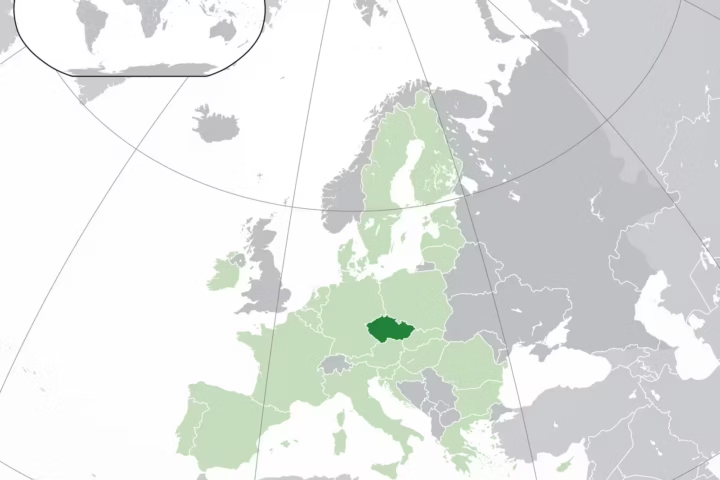
“Why the Czech Republic, of all places?” People from Germany, the Netherlands or Sweden ask us this on the phone quite often, and it’s a fair question. Of the roughly 45 dark retreat centres we know of in Central Europe, more than half are in the Czech Republic. Lenka and I have been running our dark retreat near Kutná Hora since 2013, so here is how it looks from the inside – our view, not an academic study.
In Czech, a stay in the dark is an ordinary thing
Czechs call it terapie tmou or simply pobyt ve tmě – “a stay in the dark”. The first one sounds medical when you translate it word for word, but in everyday Czech it just means time in darkness: rest, quiet, time for yourself. We’re not a clinic, and we don’t promise anyone medical results. We offer a dark, quiet cabin and the time to be in it.
What is unusual is how well known the idea is. It has been in Czech newspapers, on the radio and on TV, and plenty of people have at least heard of it. Tell a Czech colleague you’re off to spend a week in the dark, and there’s a decent chance you’ll get a nod instead of a long stare. That changes a lot. A practice that feels normal in a country gets more places, more people with years of experience, and fewer strange looks for those who go.
Old roots, short version
Spending time in complete darkness isn’t a Czech invention. Tibetan traditions know long retreats in darkness – in Bön and Dzogchen it’s called yangti. In Germany, Holger Kalweit wrote about it under the name Dunkeltherapie. The Czech centres mostly took the simple core of it: a dark, quiet space and plenty of time.
We don’t follow any religion and we don’t push one on anybody. You don’t need to meditate, chant or believe anything. What you do with the darkness is up to you – and if you mostly sleep for the first two days, you’re in very good company. That’s what most people do.
Villages, orchards and a lot of quiet
The second reason, we think, is the countryside. The Czech Republic is full of small villages, gardens and fields – places where you can put a small wooden cabin and have real quiet around it. A little wooden house at the end of a garden doesn’t surprise anybody here.
Our village, Lomec, has about 30 inhabitants. The land is about a hectare with an orchard; the nearest road is 200 metres away, and behind the cabins there are only fields and forests. With the ventilation switched off, a cabin is at about 24 dB at night – roughly the sound of leaves rustling outside a window.
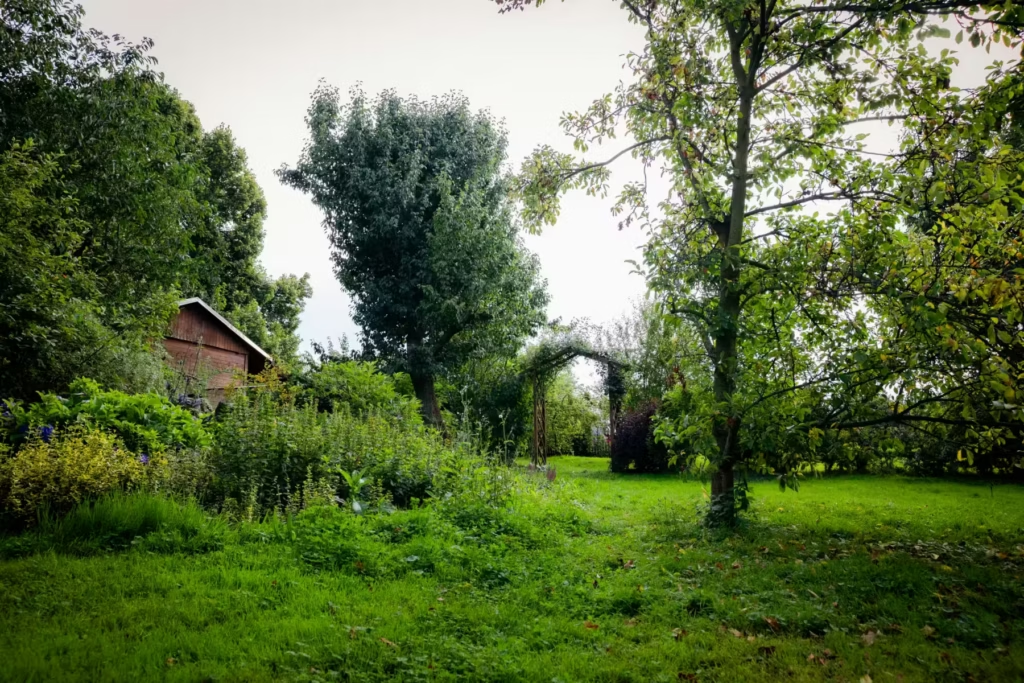
To be honest, it isn’t a vacuum. Now and then you’ll hear one of our two dogs, a rooster, or a Gripen fighter jet from the air base in Čáslav, 12 km away. We lend earplugs and ear defenders. The jets we can’t switch off 🙂
A dark retreat in the Czech Republic is easy to reach from most of Europe
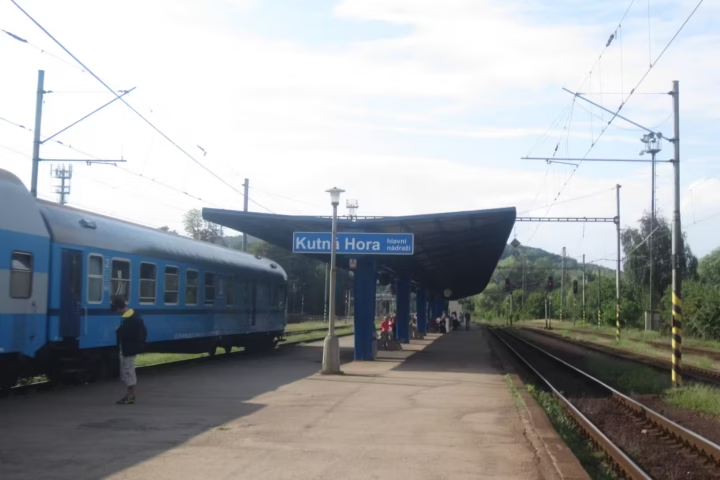
Geography helps too. Prague sits right in the middle of the continent. Vienna, Berlin, Munich, Dresden, Budapest and Warsaw all have direct trains to Prague, and from Prague it’s roughly an hour by train to Kutná Hora. If you drive, we are about two and a half hours from Dresden, about three and a half from Vienna, about four and a half from Berlin and about five from Munich.
No ferry, no long-haul flight, no jet lag. That matters more than you’d think when the whole point of the trip is to slow down. If you fly, Václav Havel Airport Prague is your gateway. The whole route, step by step, is in from Prague to Kutná Hora and our cabin door.
Our corner: Kutná Hora and the village of Lomec
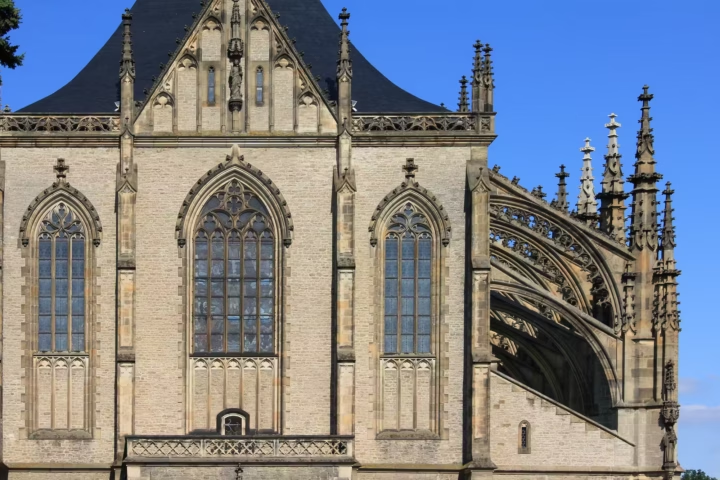
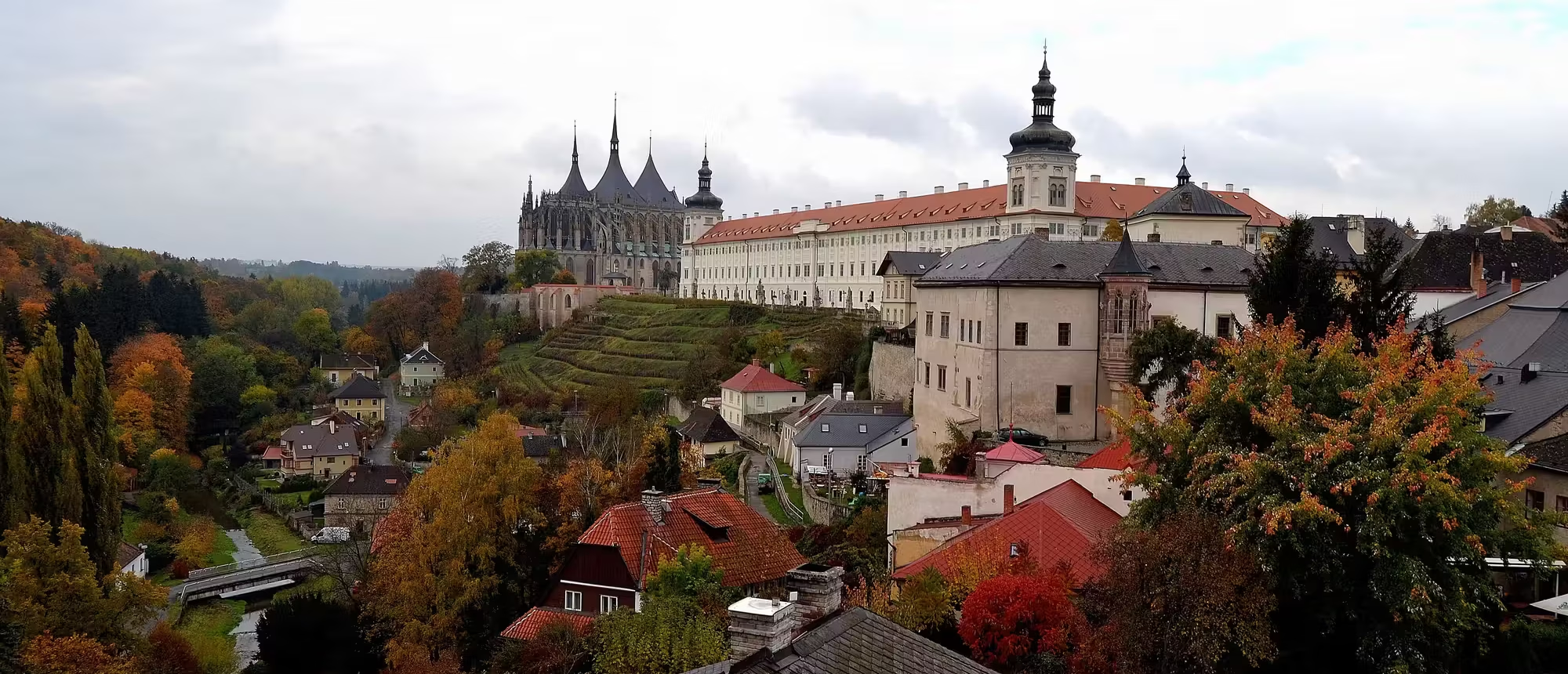
Kutná Hora is an old silver town about an hour from Prague. Its historic centre, together with St Barbara’s Church and the Cathedral of the Assumption in Sedlec, has been on the UNESCO list since 1995. Stays in the dark have a tradition in this region: we’ve been doing them here since 2013, and more than 3,000 people have spent time in our cabins. Lomec lies about 10 km south of the town, around 20 minutes by car.
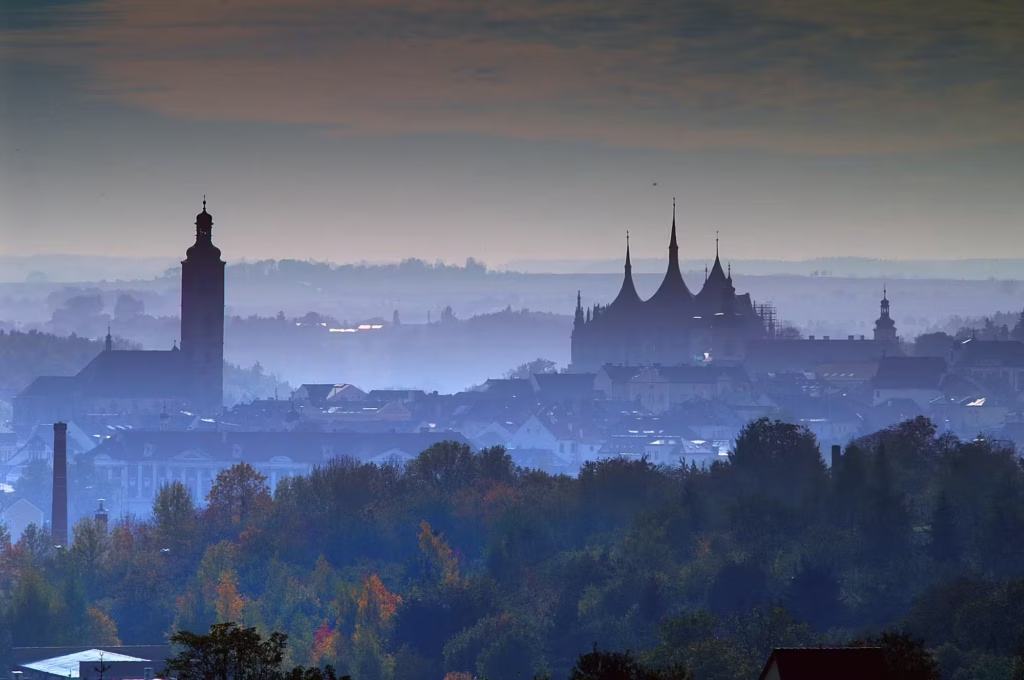
That makes for a nice combination: a city day in Prague, a slow afternoon in Kutná Hora, and then nothing but darkness. Our tips for the town are in the Kutná Hora travel guide, and the whole region is described on dark retreat near Prague.
What being in Czechia means for you in practice
- Money: the Czech currency is the koruna (CZK), so keep a card or a few crowns for trains and coffee. With us, you pay in euros – by SEPA transfer, PayPal or Wise – so there’s no currency puzzle for the stay itself.
- Language: we speak Czech and English. Tom answers the phone in English, and we write e-mails in German too, with a little help from a translator. You can ask everything in the language you think in.
- Seasons: the cabins are heated and cooled by a heat pump, so people come all year round. Snow in the orchard in winter, apples in autumn – the darkness is the same, only the walk to the gate changes.
- Who you’ll meet: mostly the two of us. Lenka works with psychology and with people, and Tom has spent a week alone in the dark himself. When you tell us on the phone that you’re nervous, we know what you mean.
So, why the Czech Republic? Because here, a week in the dark is something people have heard of, there’s room and quiet for it, and you can get here by train from much of Europe. And because Kutná Hora is a rather nice place to arrive in before you switch off the light.
If that sounds like your kind of trip, read how a dark retreat with us works or check the next free dates:
- Cabin of Freedom is available from 28 Oct 2026 −15 % · Last minute: arrival within 7 daysBook 3 nights ·
289246 - Cabin of Health is available from 31 Oct 2026 −15 % · Last minute: arrival within 7 daysBook 7 nights ·
595506Book 3 nights ·289246 - Cabin of Health is available from 4 Nov 2026Book 3 nights
- Cabin of Love is available from 7 Nov 2026Book 7 nightsBook 3 nights
- Cabin of Peace is available from 11 Nov 2026Book 3 nights
See you in the dark – Tom & Lenka
P.S. If your friends ask why you’re going to the Czech Republic to sit in the dark, tell them it’s for the old silver town. Half true 🙂